
Who We Are
Directors
UCCS’s Center for Research Frontiers in the Digital Humanities brings together the digital humanities work of UCCS faculty, students, and community members. It is currently under the leadership of co-directors Mx. Larry Eames, Dr. Jennifer Kling, and Dr. Brandon C. Strubberg, the Center was founded by Dr. Helen Davies and partners across UCCS.
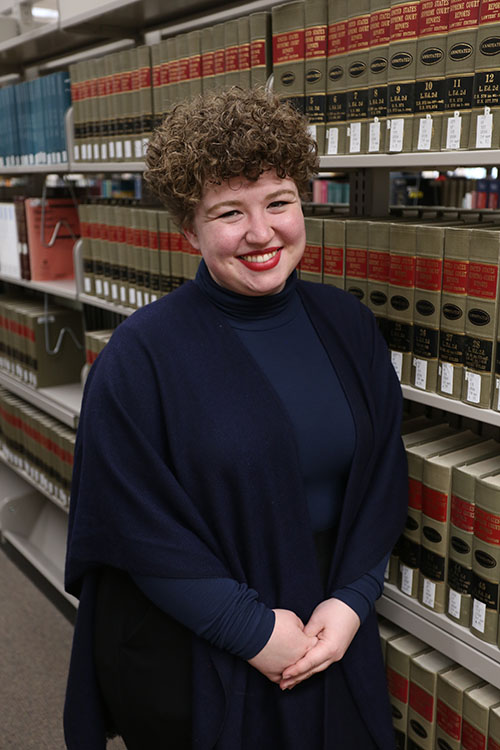
Mx. Larry Eames
Center Co-Director
UCCS – Kraemer Family Library
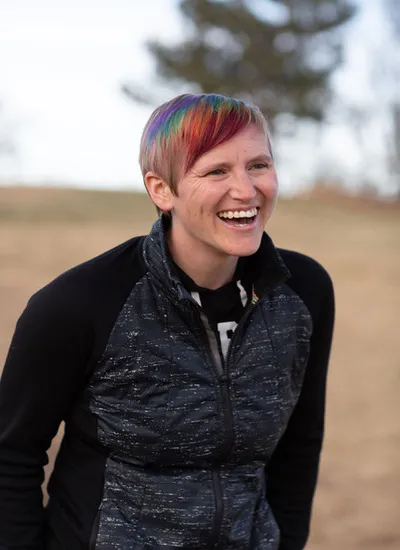
Dr. Jennifer Kling
Center Co-Director
UCCS – College of Letters, Arts & Sciences: Philosophy

Dr. Brandon C. Strubberg
Center Co-Director
UCCS – College of Letters, Arts & Sciences: Technical Communication and Information Design
Advisory Board
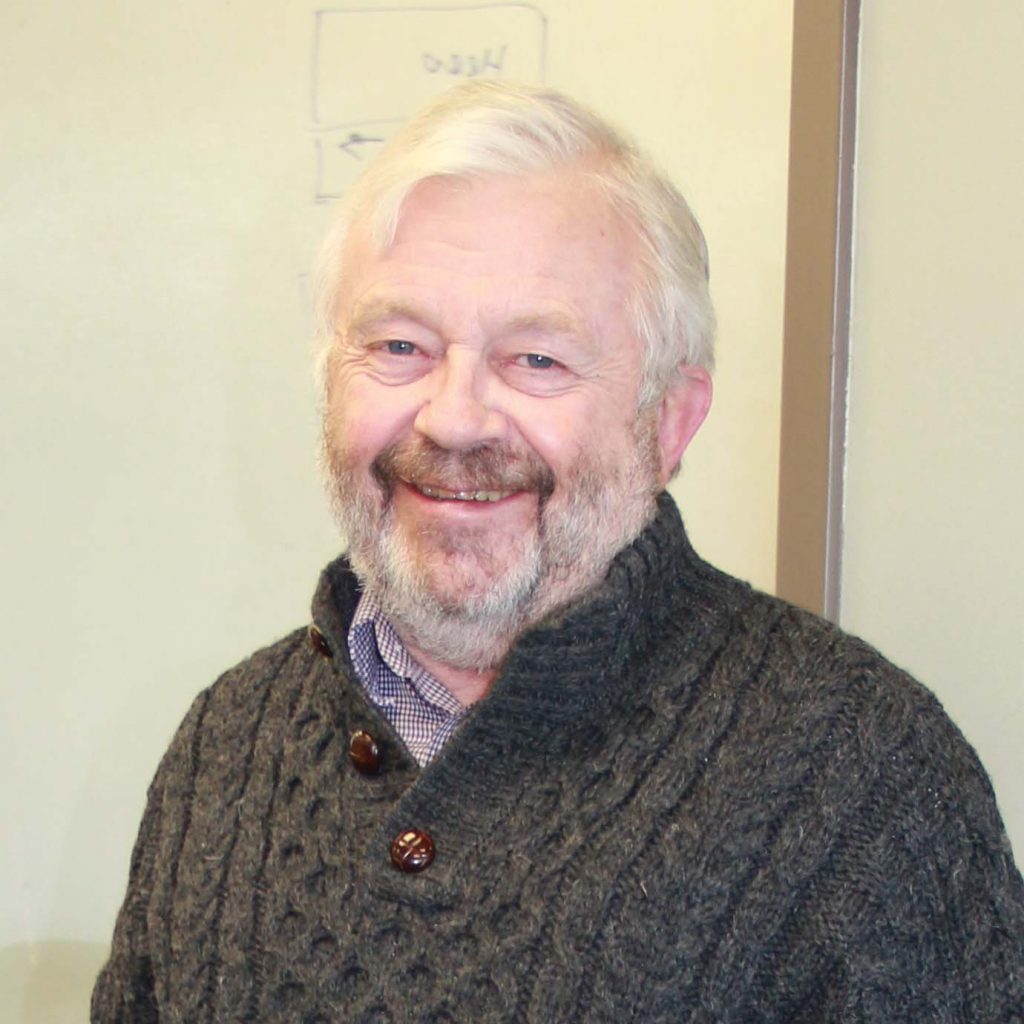
Mr. Wayne Artis
Pikes Peak State College – History
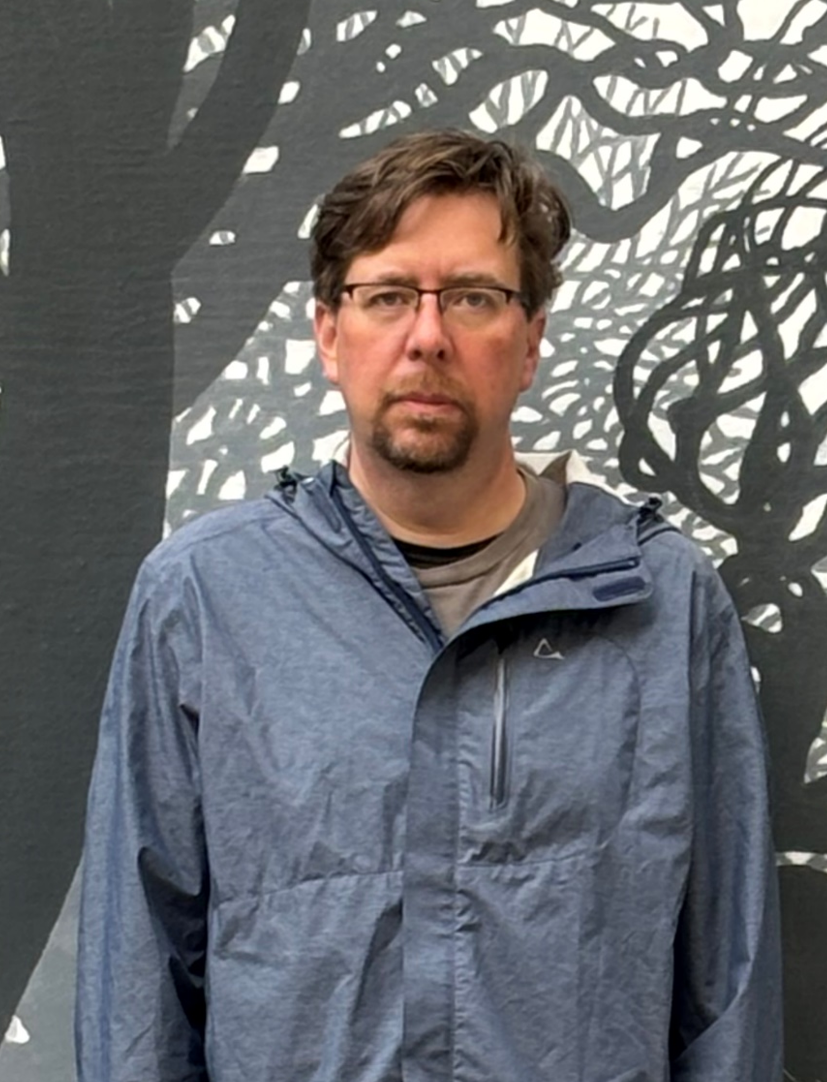
Mr. Mike Larkin
UCCS – College of Letters, Arts & Sciences: Geography and Environmental Studies
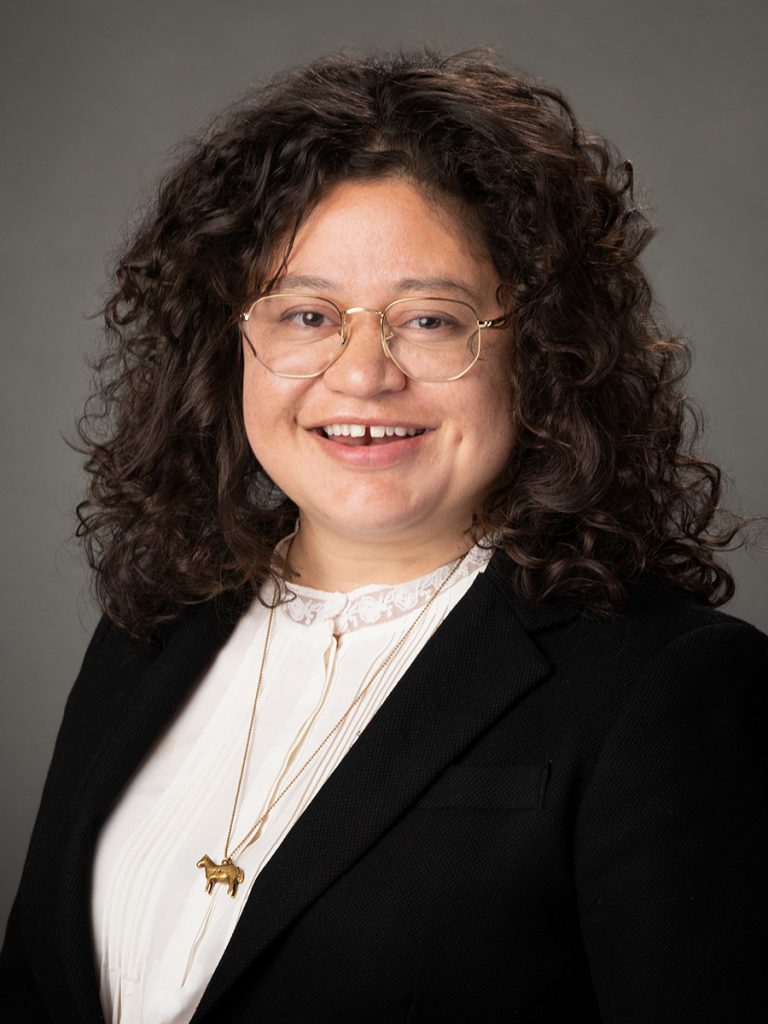
Dr. ‘Ilaheva Tua’One
UCCS – College of Letters, Arts & Sciences: Women’s & Ethnic Studies
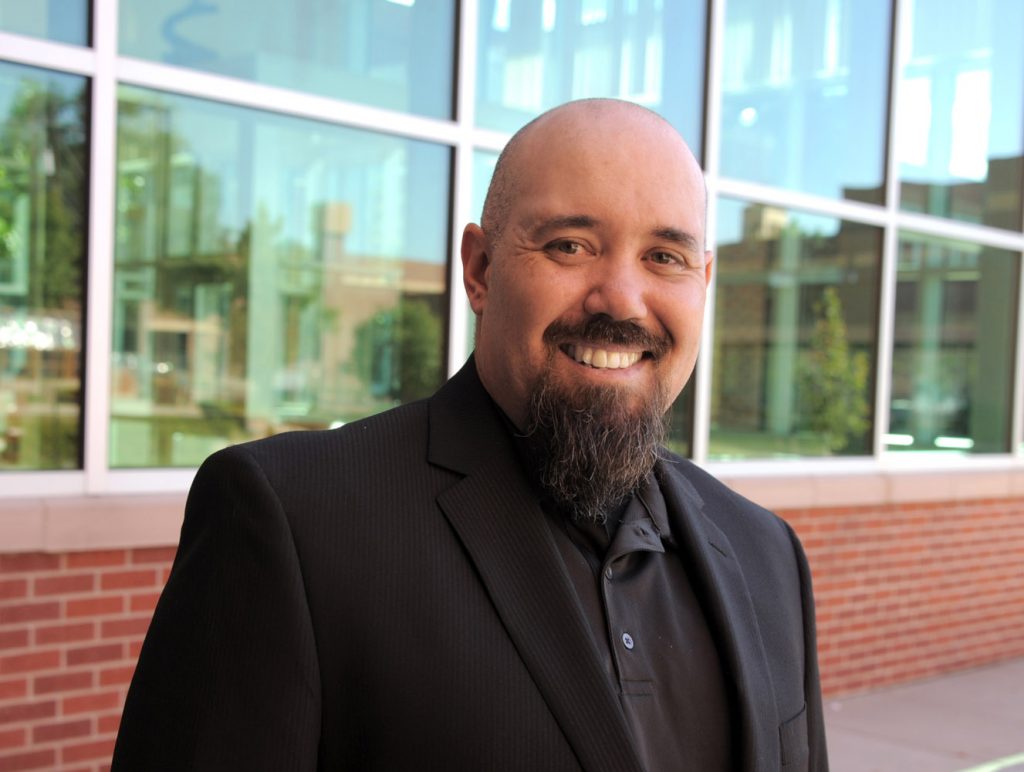
Mr. Sean Wybrant
D11 – Palmer High School
Dr. Karin Larkin
UCCS – College of Letters, Arts & Sciences: Anthropology
Affiliate Members
Dr. Ann Amicucci
LAS – English
DH Biography
Dr. Amicucci researches college student and faculty digital video creation with a focus on inclusive practices. She also studies writing in digital spaces, particularly social media. Dr. Amicucci’s recent projects have explored how hashtags create identification among digital posters and how video explorations allow students to develop awareness of multilingual individuals’ needs in public spaces. Currently, Dr. Amicucci is researching how writing faculty’s instructional videos in online courses implement Universal Design for Learning guidelines. In this study, faculty participants are engaged in training and reflection on creating instructional videos that promote student access and engagement.
Dr. Adham Atyabi
EAS – Computer Science
DH Biography
Dr. Atyabi’s work involves data analytics, artificial intelligence, and machine learning. His Neurocognition Laboratory is researching computational and cognitive neuroscience and developing assistive technology for children with autism, including developing social robotic platforms and gaming platforms for measuring executive functioning skills.
DH Biography
Dr. Hayley Blackburn is an Innovation & Design Librarian dedicated to advancing digital scholarship and creative research practices. She leads initiatives that integrate design thinking, emergent technologies, and media-forward programming into academic and community spaces. Hayley’s expertise spans instructional design, generative AI development, and strategic communication, with a research agenda exploring podcast cultures, YouTube communities, and the evolving role of media in technical communication. Recent projects include developing open-source AI models for classroom support, producing educational podcasts and video series, and designing interactive workshops that empower faculty and students to leverage technology for creative and scholarly work.
Dr. Minette Church
LAS – Anthropology
DH Biography
Dr. Church’s work focuses on Belize, Central America and the U.S.-Mexico borderlands. In both regions she focuses on landscape archaeology, decolonization of anthropology and of borderland histories, archaeology of parenting and childhood, and colonial/post-colonial identities. In her teaching, she trains students using several kinds of technologies to gather and analyze information about past lives.
Mr. Martin Conrad
PPSC – Humanities
DH Biography
He was born in the Midwest and came (home) to Colorado Springs in 1984. He lived and worked in Los Angeles as a Defense Industry contractor from 1985-1987, before returning to Colorado Springs, where he has been a resident since. He has worked as a paperboy, dishwasher, pizza maker, Defense contractor, computer-aided drafting engineer, database programmer, and website designer. After completing his post-secondary education, he was hired as full-time faculty at (then) PPCC, where he has been since 2006. His research interests are the relationship of individual spiritual expression and collective religious practice and the changing expressions of mythological archetypes through time; the cultural-social impacts of environmental change.
Dr. Diep Dao
LAS – Geography
DH Biography
Dr. Dao’s research focuses on advancing Geographic Information Science (GIS) methods to represent and analyze geographic information. Her work with 2D, 3D, and web-based maps supports digital humanities efforts by presenting data visually as an alternative or supplement to narrative text. Dr. Dao additionally utilizes DH methods such as geospatial text mining, pattern discovery, and social network analyses.
Ms. Marley Dunaway
PPSC
DH Biography
Marley Dunaway is a scholar of media studies and popular culture. Her work is concerned with the intersection of gender and digital media, with particular attention to how identities and personas are shaped by internet culture. She has a B.A. in Communication with an emphasis in Media Studies from UCCS, an M.A. in Popular Culture from BGSU, and an M.A. in Digital Studies of Language, Culture, and History from UChicago.
Dr. Fernando Feliu-Moggi
LAS – Languages and Cultures
DH Biography
Dr. Feliu-Moggi is a lead archival researchers in projects such as the cataloging of documents from Noble Laureate Miguel Angel Asturias in Guatemala. He currently leads the Colorado hub for the Colorado National Security Agency (NSA) Languages Initiative. Dr. Feliu-Moggi also produces multimedia informational materials for education purposes. Along with co-organizing cultural exhibitions in museums and cultural institutions in Spain, Guatemala, Costa Rica, and the U.S, Dr. Feliu-Moggi studies the religious traditions and cultural productions of Hispano and Indigenous groups in the Southern Colorado to Northern New Mexico region.
Dr. Jon Forshee
LAS – Visual & Performing Arts
DH Biography
Jon Forshee is a composer, educator and technologist whose creative practice often focuses on collaboration and emerging media. His compositions have been premiered throughout the United States, Europe, and in China, and are also frequently broadcast on radio and on the web. Forshee’s articles and texts on a variety of musical subjects, ranging from early speculative studies in music to contemporary musical aesthetics and analysis, appear in The Computer Music Journal, Just: Listen, Perspectives of New Music, Open Space Magazine, and in other places online and in print. Dr. Forshee currently teaches Composition, Computer Music, and Audio Engineering, and he serves as the conductor of Symphony21, the UCCS Orchestra.
Dr. Kristen Galvin
LAS – Visual Culture Program
DH Biography
Dr. Kristen Galvin is a scholar of contemporary American visual culture working at the intersection of digital cultures, media studies, contemporary art, and cultural theory, with an emphasis on gender and sexuality. She teaches in the Visual Culture Program in the Department of Visual and Performing Arts at UCCS, with a focus on critical approaches to platforms, streaming media, and the impacts of technological and economic pressures on visuality. Her current book project identifies and examines the phenomenon of “hypernostalgia,” analyzing the circulation of late twentieth century media nostalgias on twenty-first century televisual platforms and its relationship to identity politics and the culture wars in the United States. Prior to her position at UCCS, she contributed to digital humanities curriculum and research initiatives through a visiting appointment at the University of Florida’s Center for the Humanities and the Public Sphere, as a Co-Chair and member of the DH Graduate Certificate Committee and the DH Working Group.
Dr. Cerian Gibbes
LAS – GES
DH Biography
Dr. Gibbes’ research interests center on understanding humans and their interactions with the environment, particularly the social and ecological impacts of land use decisions in spaces where agriculture and conservation overlap.
She uses geospatial technologies, remote sensing, and integrated mixed methodological approaches to develop understandings of people, place, and the environment.
Dr. Lesley Ginsberg
LAS – English
DH Biography
Lesley Ginsberg’s teaching and scholarship focuses on material and digital archives. Her teaching at UCCS with digital archives was recognized by a 2021 MLA-EBSCO Collaboration for Information Literacy Prize (with Larry Eames) and a 2021 UCCS-LAS Teaching Award-Online Teaching Category. She is the recipient of a 2023-24 U.S. Fulbright Visiting Lecturer award in American literature-Japan where her project was teaching with digital archives. She is grateful to be part of a dynamic group of DH scholar-teachers at UCCS!
Dr. Catherine Grandorff
LAS – English
DH Biography
Dr. Grandorff is the Assistant Director of the English Department’s First-Year Rhetoric and Writing Program. In this capacity, she facilitates faculty professional development in part around Generative AI and digital literacy. As Visiting Author Coordinator, she oversees the UCCS Visiting Author Series, which brings writers to campus and broadcasts their readings virtually. In her role of Faculty Resource Center Teaching Fellow, Dr. Grandorff offers mentorship for fellow faculty members around online teaching and cultivating belonging in digital spaces. Her research and writing explore the intersection of gender, power, and language.
Dr. Phillip Haisley
LAS – English
DH Biography
Dr. Phillip Haisley is the UCCS Director of General Education and a Teaching Professor in English. Phillip teaches courses in advanced grammar, developmental writing, rhetoric, and environmental advocacy. His areas of interest include the role of AI in education, student success, second language writers, and disciplinary writing. Phillip has previously taught a diverse range of courses including pre-collegiate writing for international students, technical and disciplinary writing for upper division engineering students, and courses in designing a professional portfolio. Phillip has also served as the Director of the Writing Portfolio at UCCS, as a text-book editor, as a professional curriculum developer, and as the Assistant Director of the Oklahoma State University Writing Center. Phillip’s personal interests include electronic music, science fiction, gaming, hiking, and fine dining.
Dr. John Harner
LAS – Geography
DH Biography
Dr. Harner’s archival work studies the formation of place identity, how actors work to construct that identity or brand, and how people form place connections. He utilizes Geographic Information Systems to illustrate urban change through time as a complement to other historical documents and narratives. He partnered in The Story of Us, a museum exhibit using geospatial tools to tell the story of Colorado Springs.
Dr. Dylan M. Harris
LAS – GES
DH Biography
Dylan M. Harris is an assistant professor of geography and environmental studies. His work focuses on the stories we tell (and don’t tell) about socioecological change, focusing specifically on the procedural elements of climate and energy justice. He is interested in work that exists at the intersection of change, drawing from what he terms experimental and speculative political ecology to critically study the unequal power structures informing many “transition” projects (e.g., carbon offsets) while also aiming to disrupt them, pointing towards more equitable possibilities, through interventionist research.
Dr. Paul Harvey
LAS – History
DH Biography
Paul Harvey researches, writes, and teaches in the field of American history from the 16th century to the present. He is the author/editor of thirteen books and numerous articles. Harvey is the creator and “blogmeister” of the nationally known professional scholarly blog Religion in American History, and is a contributor to the online journal Religion Dispatches.
Dr. Jennifer Kling
LAS – Philosophy
DH Biography
Dr. Jennifer Kling is Associate Professor of Philosophy and Director of the Center for Legal Studies at the University of Colorado, Colorado Springs. Her research focuses on social and political philosophy, particularly issues in war and peace, protest, feminism, and philosophy of race. She is the creator and organizer of CPP: Assemble! Activate!, an online forum dedicated to all kinds of peace work. In this digital space, folks can come together to learn about how to do public philosophy and peace work, engage in group action and activism, and discuss important contemporary issues and topics, including what it means to be human and humane in a world often characterized by violence, war, and atrocity.
Mr. Christopher Malec
EAS – Game Design
DH Biography
Christopher Malec is an Associate Teaching Professor and Program Coordinator of the Game Design and Development program at UCCS. His research interests include the application of game design principles in conjunction with the performing arts to create more dynamic and engaging classroom experiences.
Dr. Colin McAllister
LAS – Visual & Performing Arts
DH Biography
Colin serves as Director of Humanities and an Associate Professor in the Department of Visual and Performing Arts where he directs the Sagitta Guitar Ensemble and organizes the Solertia Humanities Speaker Series. His research interests include contemporary music performance and pedagogy, musical modernism, and the apocalyptic paradigm as manifested in varying phenomena—literature, music, and art. He has been awarded the College of Letters, Arts, and Sciences Outstanding Awards in both Teaching and Creative works and has served as both Daniels Ethics Fellow and a Faculty Career Fellow with the College of Letters, Arts, and Sciences and the T. Rowe Price Career and Innovation Center.
DH Biography
Dr. Seth M. Porter is the Dean of the Kraemer Family Library & Lead of Online Education for Academic Affairs at the University of Colorado Colorado Springs. His research interests include rural development and wine economics, education technology, decolonization of knowledge, digital scholarship, organizational performance, strategy and management, and project management
Ms. Rebecca Posusta
LAS – English
DH Biography
A native of New Orleans, Louisiana, Professor Rebecca Posusta received her B.A. and M.A. in English Literature from Georgia State University in Atlanta, Georgia. She moved to Colorado in 2006 and in 2008, she joined the English department faculty at UCCS as an instructor in Literature. She was promoted to Teaching Professor in 2023 and is a specialist in Study Abroad programming. She teaches a variety of introductory courses in literature, British literature of the seventeenth, eighteenth and nineteenth century; a Sustainability course on Environmental Stewardship and the Management of the Estate in Literature; Science Fiction and Reading the Past. In 2012, she also became an instructor in the Humanities program and has taught courses on Jane Austen, Charles Dickens, the Southern Gothic and literature of the Great War along with faculty from the History Department. A Jane Austen scholar, Professor Posusta has published articles on Jane Austen’s Persuasion in Critical Surveys and Approaches to Teaching Austen’s Persuasion. She has also presented papers on Austen at numerous Annual General Meetings for the Jane Austen Society of North America (JASNA). She currently serves as Regional Coordinator for the Pikes Peak Region of JASNA. In 2023, Professor Posusta began an new project looking at the lives of the students at a 19th century reformatory school in Leeds, UK, and was awarded grants through the Humanities Program and the Teaching Enhancement program at UCCS. She traveled to Leeds in March 2024 to retrieve archival materials and document the current condition of the reformatory. In November of 2025 she presented her research at the PAMLA conference in San Francisco. A self-confessed bookaholic, Professor Posusta believes in lifelong education and enjoys reading anything and everything. Stop by her office and take a look at her collection of vintage 19th and early 20th century books.
Prof. Michelle Prose
LAS – English
DH Biography
Michelle’s pedagogy is focused on First Year Rhetoric and Writing, where she helps new and returning undergraduates navigate rhetorical analysis, argumentation, research, and style. Her pedagogical and research interests include the intersection between generative AI and ethics, adoption of generative AI into productive writing practices, and preparing students for the changing landscape of writing practices in the “Cognitive Revolution.”
Dr. Jenna Rice
LAS – History
DH Biography
Jenna Rice Assistant Professor of Ancient Mediterranean History Columbine 2053 UCCS [email protected] Dr. Rice is a socio-military historian of antiquity, and studies the sociology of animal use in ancient Greek and Macedonian combat. In particular, she is interested in the war elephant, the messenger and pack camels, and military canines. The creation of digital photo archives of ancient pottery, statues, and coinage has immensely influenced my ability to assess the way animal imagery was used in the context of war and royal propaganda, and she enjoys integrating these facets of my research into the courses that I teach. Current projects to be featured: Do Tusks Make the War Elephant?: Tusk Depiction in Elephant Art and Propaganda of the Diadochoi Publication Project for Routledge Press Brief description: Perhaps the most famous depiction of a war elephant from antiquity comes from a 3rd century BCE Campanian plate at the Villa Giulia alleged to illustrate the war elephants of Pyrrhus of Epirus, the first to introduce Romans to elephant warfare. The plate is one of dozens of physiologically accurate depictions of Elephas maximus issued by the so-called “Successors” of Alexander. On the plate, the baby elephant follows its mother in a lifelike fashion, a relict of herd life that tamed, but not domesticated, elephants preserved. However, its mother inexplicably boasts a mighty set of tusks, a defensive adaptation that only male Indian elephants can grow. The artist clearly intended to represent a female elephant, as babies do not live with, or follow, adult male elephants. This unusual inclusion of tusks invites consideration. Both the Ptolemies and the Seleucids produced a plethora of elephant imagery linked to their dynasty and their Punjab campaign with Alexander. Their elephants, prior to the later Ptolemaic adoption of African species, were Indian elephants. And yet, all depicted in coinage or on plates bears tusks. By assessing elephant behavior in battle as well as accounts of elephant families on the battlefield, this paper will argue that the tusked elephant is not an accurate representation of the war elephant population. Rather, it was a deliberate focus chosen by early Hellenistic kings whose audience and court associated elephants with tusks. Συστρατιώτης Κύων (Soldier Dog): The Dog in Ancient Greek Warfare In Publication project for Verlag Dr. Kovac Press Brief Description: The existence of canines in ancient Greek warfare is evidenced by rather little literary and epigraphy data, and the scholarly consensus removes them almost entirely from the military arena. Numerous depictions of canines in scenes of war from the Archaic to Classical Periods of Attic pottery production are dismissed as derivative of Syrian artistic traditions or merely symbolic. By surveying Attic depictions of canines in the military arena, I argue that dogs were a real presence in military marches and camps, and that some of them were likely used in battle in keeping with the Anatolian tradition. A survey of the CARC’s Beazley Archive, which contains thousands of archived photographs of Attic pottery, allowed me to draw up a lengthy list of canine representations in military scenes, including: departure scenes, march scenes, and charge scenes. Evaluating these images alongside epigraphic and literary evidence allows for a more complete picture of canine participation in the military realm of the ancient Greek world.
Ms. Kacey Ross
LAS – English
DH Biography
Kacey is the Director of First-Year Rhetoric and Writing and Writing Across the Curriculum. In these roles she thinks about engaging pedagogy and supporting folks who teach writing. She also co-leads the campus AI working group. Across her work, she works on the intersection of writing, reading, thinking, learning, and technology.
DH Biography
Rupp is an archivist with Kraemer Family Library who works to preserve and create access to unique materials. Her DH work includes making digital surrogates of original materials and the information they contain available as well as creating tools to access and use the contents of the materials. She works with UCCS students in the research and creation of digital humanities projects while reducing handling of the original materials to prolong their survival.
Dr. Brandon Strubberg
LAS – Technical Communication & Information Design
DH Biography
Brandon joined UCCS in 2024 as Associate Professor and Chair of the Department of Technical Communication and Information Design. He has published broadly in the areas of generative AI, technical communication pedagogy, tech comm-marcomm convergence, and the usability of gaming hardware and software. He has also published professional pieces in the areas of editing and medical communication. His work has appeared in Technical Communication, Programmatic Perspectives, and Intercom, among other venues.
Dr. Kimbra Smith
LAS – Anthropology
DH Biography
Dr. Smith’s research looks at the complex processes of producing collective memory and developing strategies that enable communities to negotiate around and within oppressive political and economic systems. Her theoretical research includes the politics of cultural production and political uses of archaeology in the Andes; the production of racialized geographies in Ecuador; the politics of value and the concept of authenticity; and fluidity and the creation of fields of interactive practice as indigenous methodologies of decolonization. Dr. Smith is currently developing DH projects that ensure broader community access to and control over local histories and that better reflect the value of the liberal arts and sciences and their impact on quality of life.
Dr. Evan Taparata
LAS – History
DH Biography
Dr. Taparata is interested in the intersection of digital humanities and public history. His research and teaching interests revolve around migration, belonging, law, and empire in the 19th and 20th century United States. He advised several digital projects at the University of Minnesota’s contribution to the Humanities Action Lab’s States of Incarceration initiative.
Dr. Rebecca Theobald
LAS – GES
DH Biography
Rebecca Theobald directs GeoCivics, asking geographic questions to address electoral redistricting and emphasizing the role geospatial technology plays in drawing districts. GeoCivics brings together a suite of resources to support educators and community organizers to explore the process of apportionment and representation. She edited National Council for Geographic Education’s journal, “The Geography Teacher”, from 2016 to 2024 and has worked with National Geographic and geography educators across the United States.
Dr. Kristen Walcott
EAS – Computer Science
DH Biography
Dr. Kristen Walcott is an Associate Professor of Computer Science at University of Colorado Colorado Springs whose work bridges software engineering, AI-assisted development, and computing education. Her research focuses on the human and organizational aspects of building technology, including requirements, collaboration, testing, and project coordination. She is particularly interested in how thoughtful, sustainable engineering practices can support interdisciplinary scholarship and make technical tools more accessible to diverse communities. Walcott teaches software engineering and project management and is deeply committed to mentorship and broadening participation in STEAM through outreach and service, including her role as co-advisor for the Society of Women Engineers. As a Digital Humanities affiliate, she enjoys partnering with researchers to translate complex ideas into practical, human-centered computational solutions.
DH Biography
Mr. Williams is the Interim AVC and CIO for UCCS. He and his teams ensure that that data is preserved and to support the digital needs of the center. His efforts surrounding research computing further the mission of the center through large scale data processing.
Ms. DeLyn Winters
LAS – English
DH Biography
Professor Winters uses technology in novel and diverse ways in her First-year Rhetoric and Writing classes. She also works alongside veterans as they express their ideas in writing, helping them to publish their work both in print and on different digital platforms
Dr. Ruhan Yang
EAS – Game Design
DH Biography
Dr. Ruhan Yang is an Assistant Professor of Game Design and Development in the Department of Computer Science at UCCS. She directs the GAME Lab, the Games, Artifacts, and Multisensory Experiences Lab. Her work spans Human-Computer Interaction (HCI), physical computing, computational making, and material practice. She creates tangible computational systems, including paper robots, paper circuits, haptic interfaces, and interactive artifacts that make computation visible, touchable, and buildable. Across these projects, she studies how hands-on interaction can make abstract systems open to exploration and interpretation.
Her recent work brings this material approach to environmental and cultural questions. Lighting the Reef uses modular paper circuits to make coral fragility tangible. Participants build, dim, interrupt, and repair glowing paper structures as they encounter ecological stress and interdependence through action. In related projects, she uses paper-based interaction to reinterpret Silk Road histories through participatory maps and installations. Rather than treating paper as a passive surface, her work asks how everyday materials can become interpretive media for public humanities, ecological reflection, and embodied forms of expression.
For more information about Dr. Yang’s previous work, please visit ruhanyang.com. To follow her latest projects and works in progress, please visit her Instagram @Ruhan_Toy_Maker.
Dr. Fuzhen Yin
LAS – GES
DH Biography
Dr. Yin’s research explores human dynamics in a hybrid context including cyber, relational and physical spaces. Her work with geospatial AI agents, network analysis and urban modeling aims to empower communities and improve urban resilience in the age of uncertainty. By leveraging advanced spatial analysis and visualization techniques, she extends DH research to a geographical context.
Personal website: https://www.gis-social.org/