Research
Our research spans three distinct areas within biophysics and nanomedicine, with a central focus on disease detection and biomarker discovery.

Nanoparticles protein corona: The protein/biomolecular corona, which develops as a biological layer on the surface of nanoparticles when exposed to biological fluids, significantly influences how these nanoparticles interact with biological systems. This crucial change is key in determining the nanoparticles’ safety, biodistribution, and their effectiveness in diagnosis and treatment. We modulate the protein corona composition and use the dynamic formation of the protein corona on nanoparticles when exposed to biological fluids, to capture rare and low-abundance biomolecules for various disease detection purposes.
Related Publications:
A. A. Ashkarran et al., Nature Communications, 2024, 15:9638.
H. Gharibi, A. A. Ashkarran, et al., Nature Communications, 2024, 15, 342.
A. A. Ashkarran et al., Nature Communications, 2022, 13, 6610.
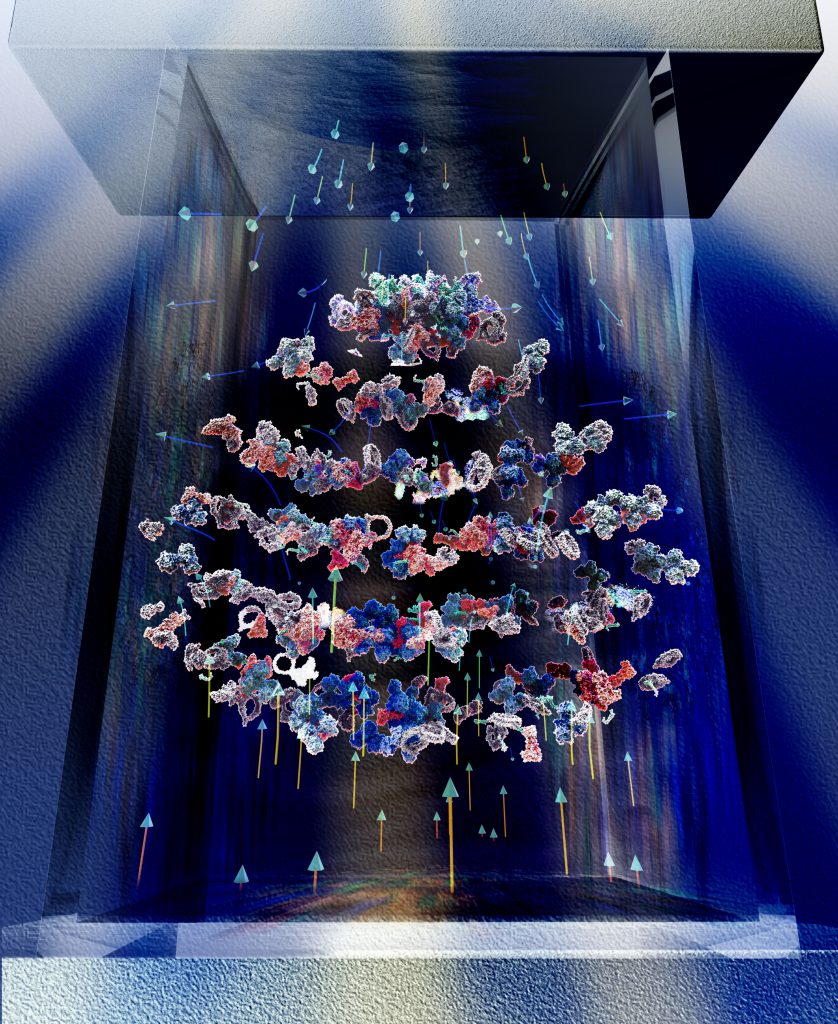
Magnetic levitation for disease detection and biomarker discovery: We use innovative emerging technologies, including magnetic levitation to develop a novel disease diagnostic platform based on the unique respond of biomolecules to external magnetic fields and creating a unique biomolecular fingerprint suitable for disease detection/discriminations.
Related Publications
A. A. Ashkarran et al., Biosensors and Bioelectronics, 2023, 220, 114862.
A. A. Ashkarran, et al., Trends in Biotechnology, 2021, 39, 311.
A. A. Ashkarran, et al., Advanced Healthcare Materials, 2020, 9, 1901608.
A. A. Ashkarran, et al., Nanoscale, 2020, 12 (4), 2374-2383.
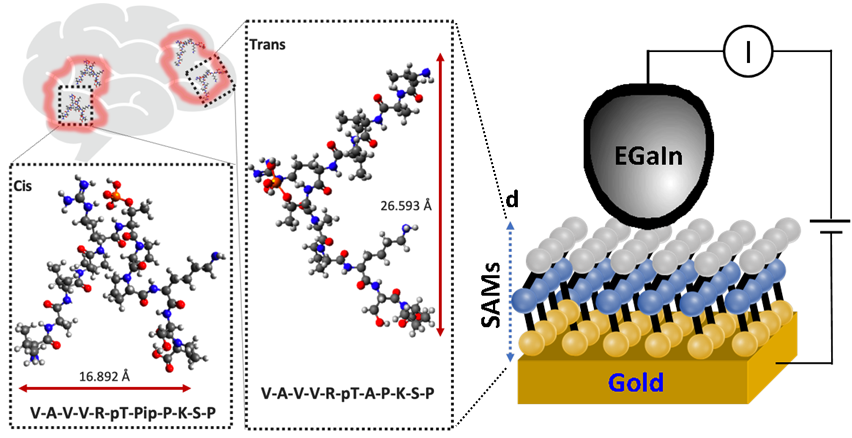
Bioelectronics: Electron transport through biomolecules plays a critical role in essential biological processes such as respiration, photosynthesis, and enzymatic catalysis, making these molecules highly promising components for bioelectronic devices. Our research investigates fundamental charge transport characteristics across peptides and proteins in molecular junctions with practical applications in biotechnology and bioelectronics. We tune the electronic properties by structural variational and conformational changes of peptides/proteins as ideal building blocks for next-generation biosensors and bioelectronic devices.
Related Publications
W. Thompson, J. Burrows, R. Safavi Sohi, M. Rostami Osanloo, H. Sadeghi, A. Morgenstern, A. A. Ashkarran, Phosphorylation-Dependent Charge Transport in Biomolecular Junctions of Major Histocompatibility Complex Phosphopeptides, Journal of Physical Chemistry B, 2026, In press.
A. A. Ashkarran et al., Journal of Colloid and Interface Science, 2022, 606, 2038.
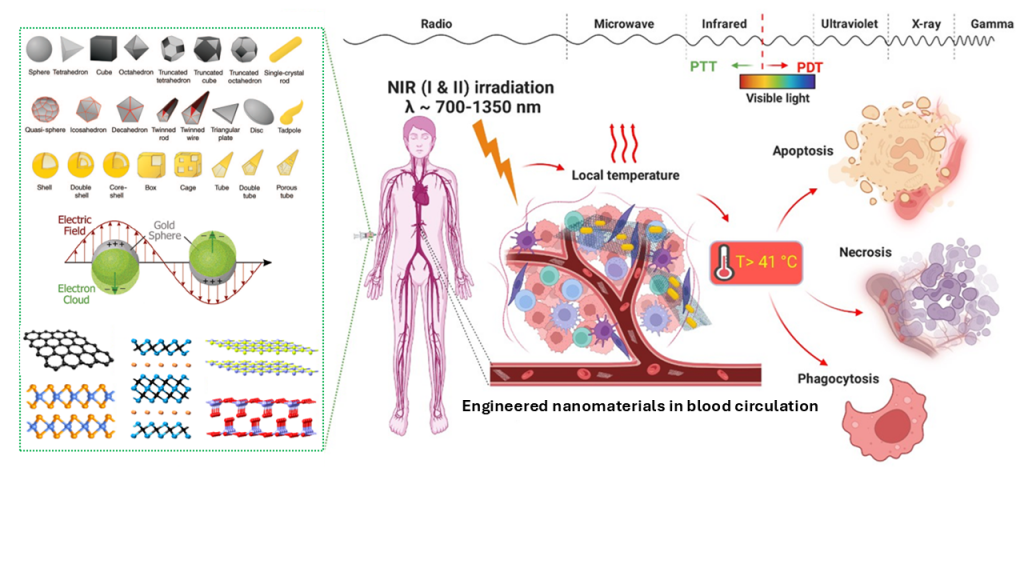
Shape-controlled nanomaterials for cancer hyperthermia: Engineered nanomaterials, including two-dimensional nanomaterials (2DNMs) and plasmonic nanostructures, hold great promise for photothermal therapy (PTT) due to their tunable optical properties, high photothermal conversion efficiency, large surface area, biocompatibility, and versatile functionalization. These materials efficiently convert light into thermal energy, enabling effective cancer treatment. Our research focuses on optimizing the plasmonic and optical properties of nanomaterials to enhance near-infrared (NIR) absorption for targeted and efficient cancer hyperthermia therapies.
Related Publications
A. A. Ashkarran, et al., Small, 2024, 2301385.
MR Osanloo et al., Graphene and 2D Materials, 2024, 1, 1-27.
M. Derakhshi, et al., Nanotechnology, 2018, 29, 285102.
S. Daemi, et al., Sensors and Actuators B: Chemical, 2017, 245, 55-65.